
B2B lead segmentation is manual and complex. It does not need to be. Here is how to use AI to do intelligent lead segmentation in three straightforward steps.
The Challenge of Segmenting B2B Leads
Say you sell martech software to B2B companies. You would think segmenting leads by persona would be easy. Just look at a lead's title. A CMO -- that is a decision maker. A demand generation specialist? A user. A product marketer? An influencer.
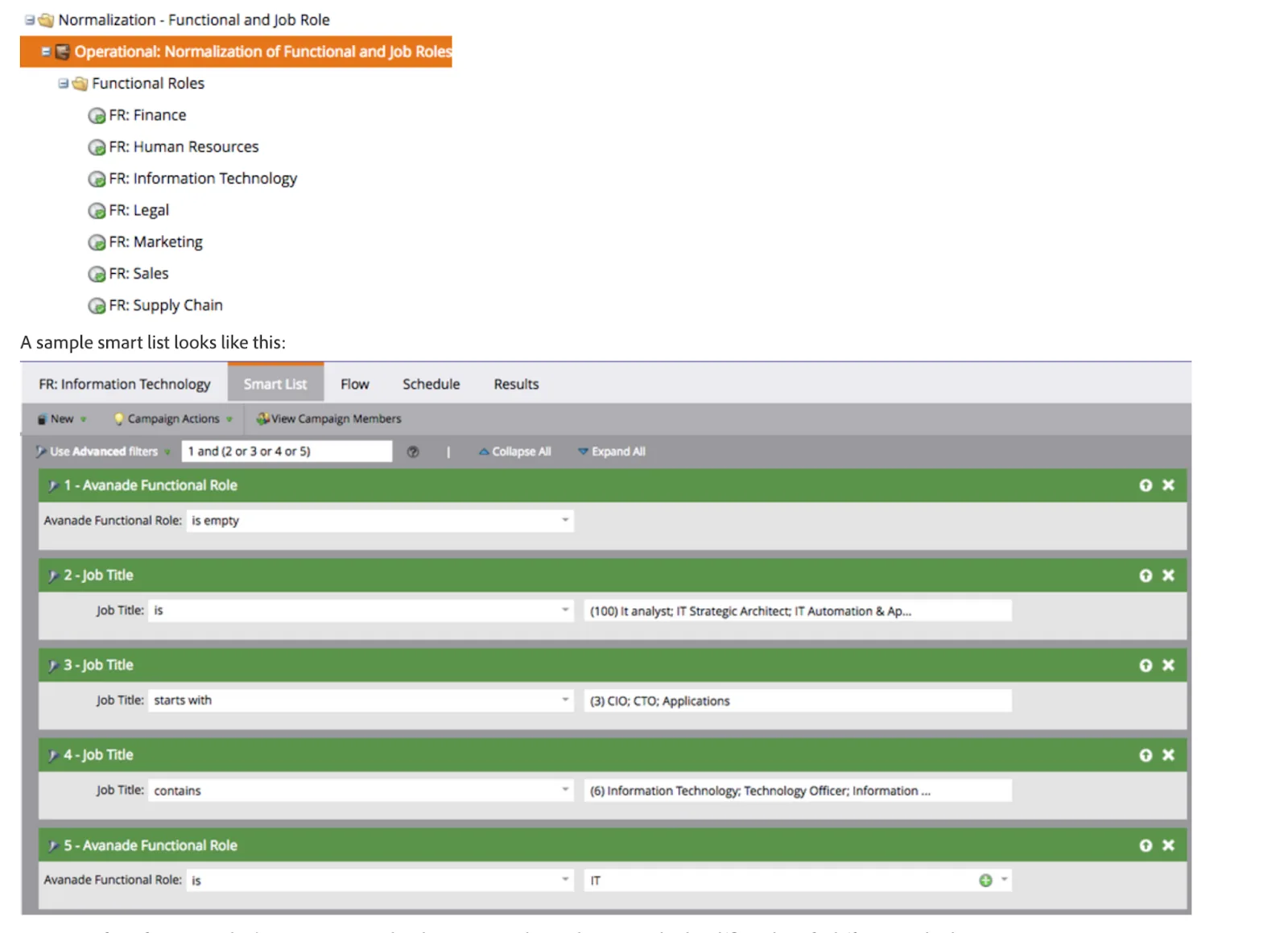
Most people create a rule in their marketing automation platform (MAP) to do keyword matching (e.g., look for a title that contains "Chief Marketing Officer" or "CMO") on the title. The match then puts the lead in the appropriate persona campaign. Here is a sample of doing this in Marketo via a smart list:
Creative titles break these rules. "Head of Global Marketing." "Chief Marketing Digital Officer." And my personal favorite, "VP of Making it Rain." If you do not have a rule for it, the lead never gets assigned to a campaign.
The Power of AI in Classifying Job Titles
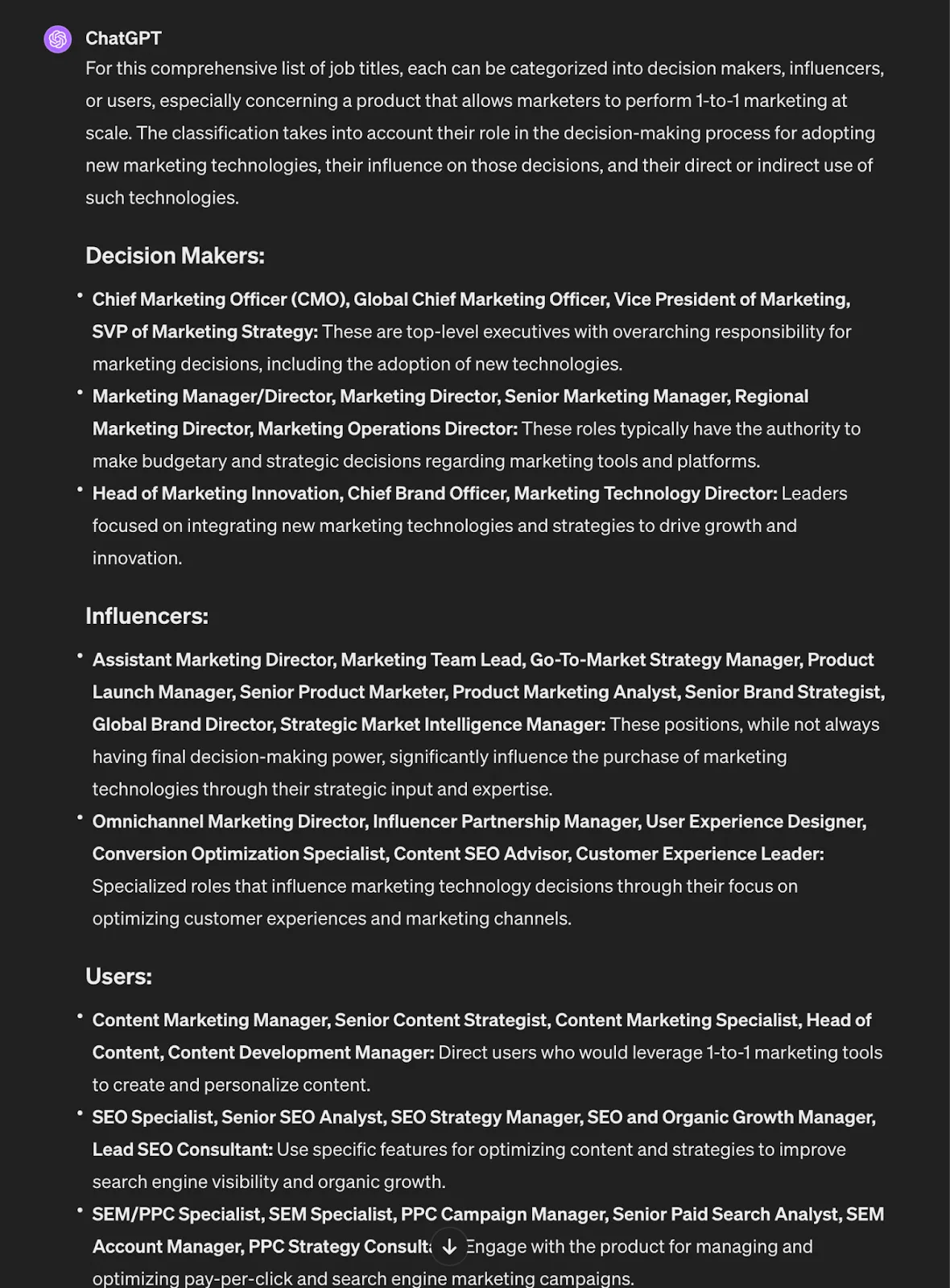
You can use AI to classify job titles into three categories -- decision maker, user, and influencer -- then build your MAP automation around those classifications instead. That alone should drastically simplify your rules.
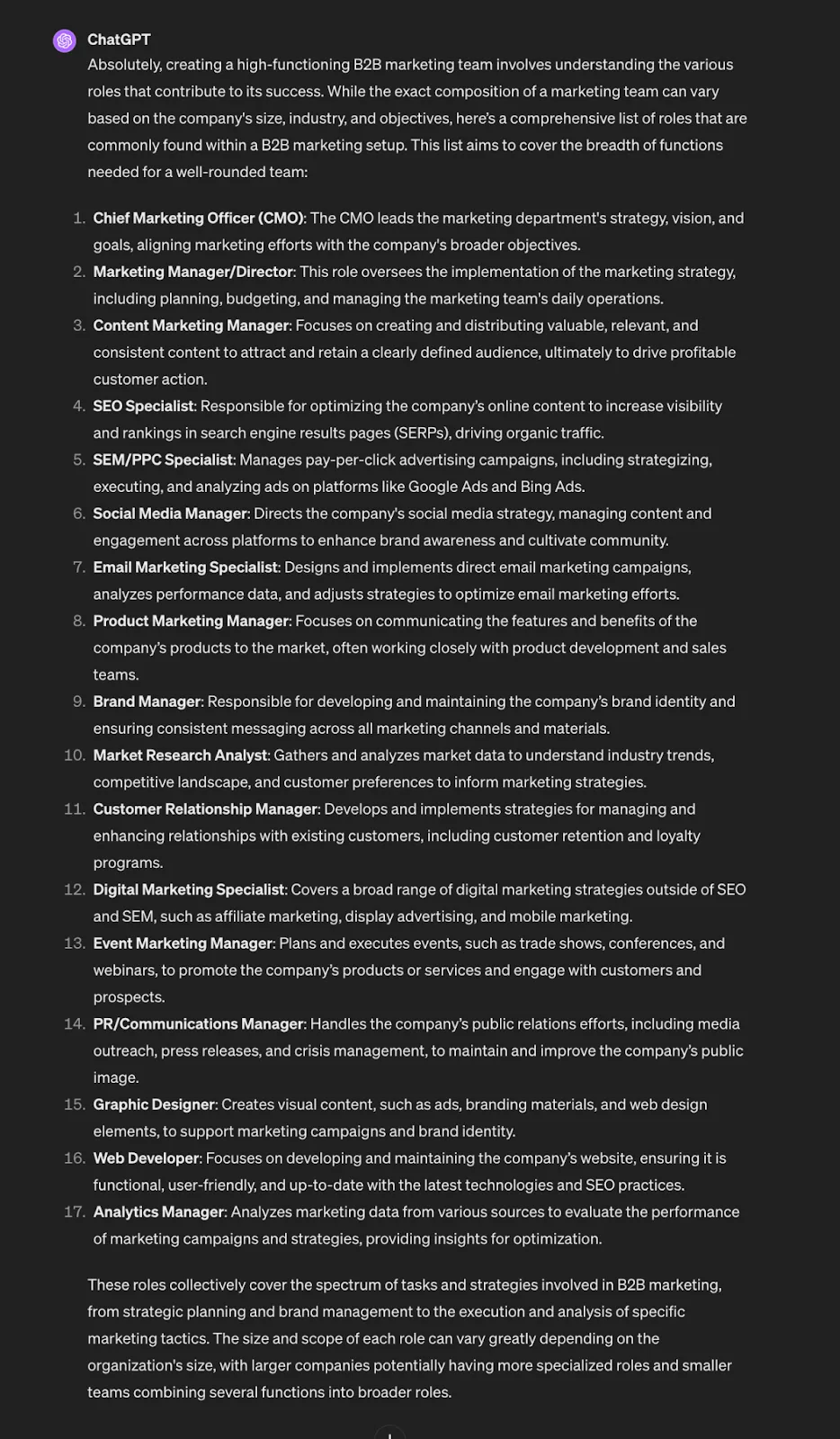
Step 1. Ask ChatGPT for an exhaustive list of roles within a marketing team.

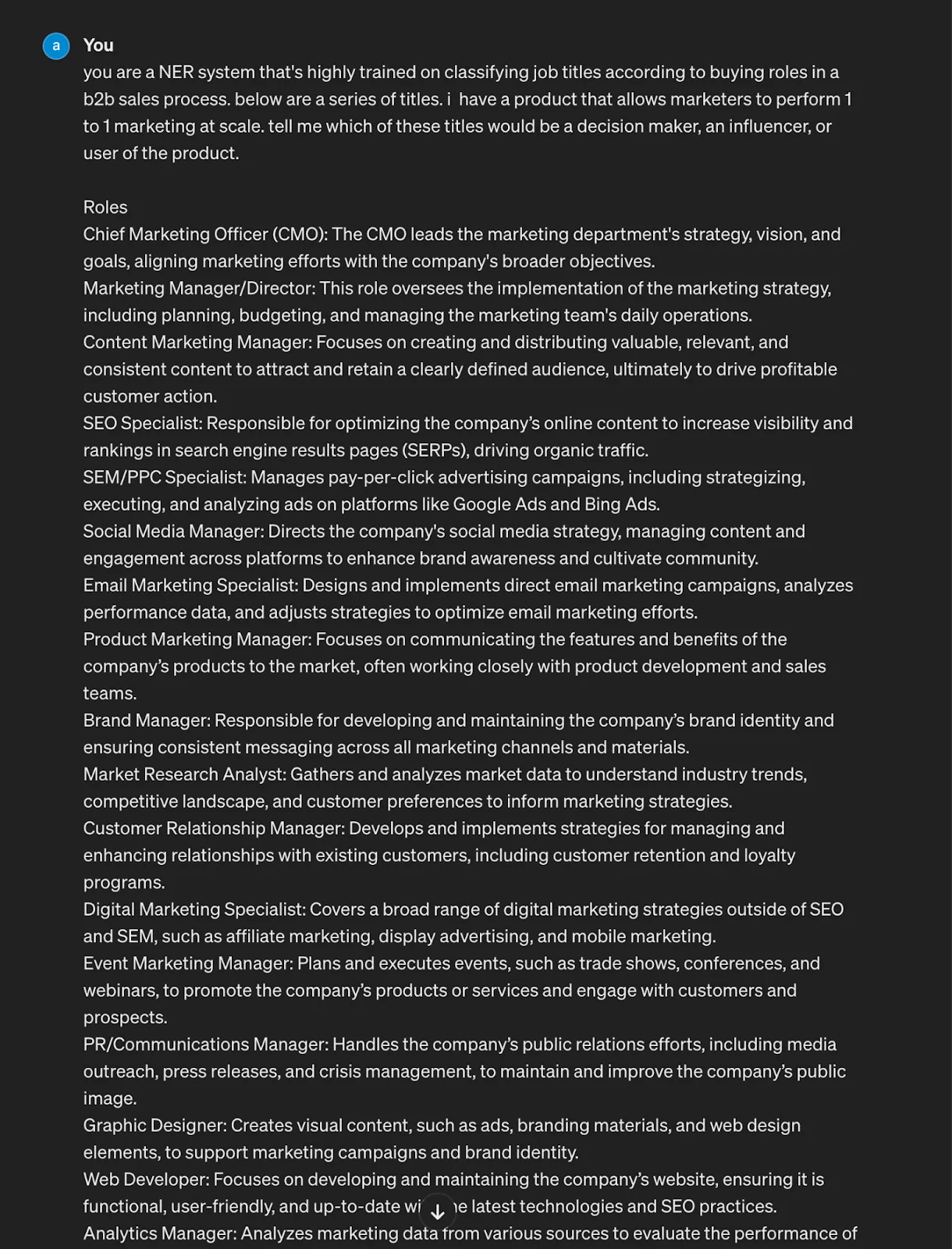
Step 2. Give the model context about what this hypothetical company does, then feed it the generated role list and ask it to categorize each role into decision maker, user, or influencer.
An alternate approach: zero-shot classification, where you provide sample titles for each of the three personas and then ask the model to classify the full role list it previously generated.
Step 3. Tell the system it is a NER (named entity recognition) system. Feed it all of the marketing roles and their classification into decision maker, user, and influencer. Then give it a list of actual lead titles from inside your marketing system and have it classify them.
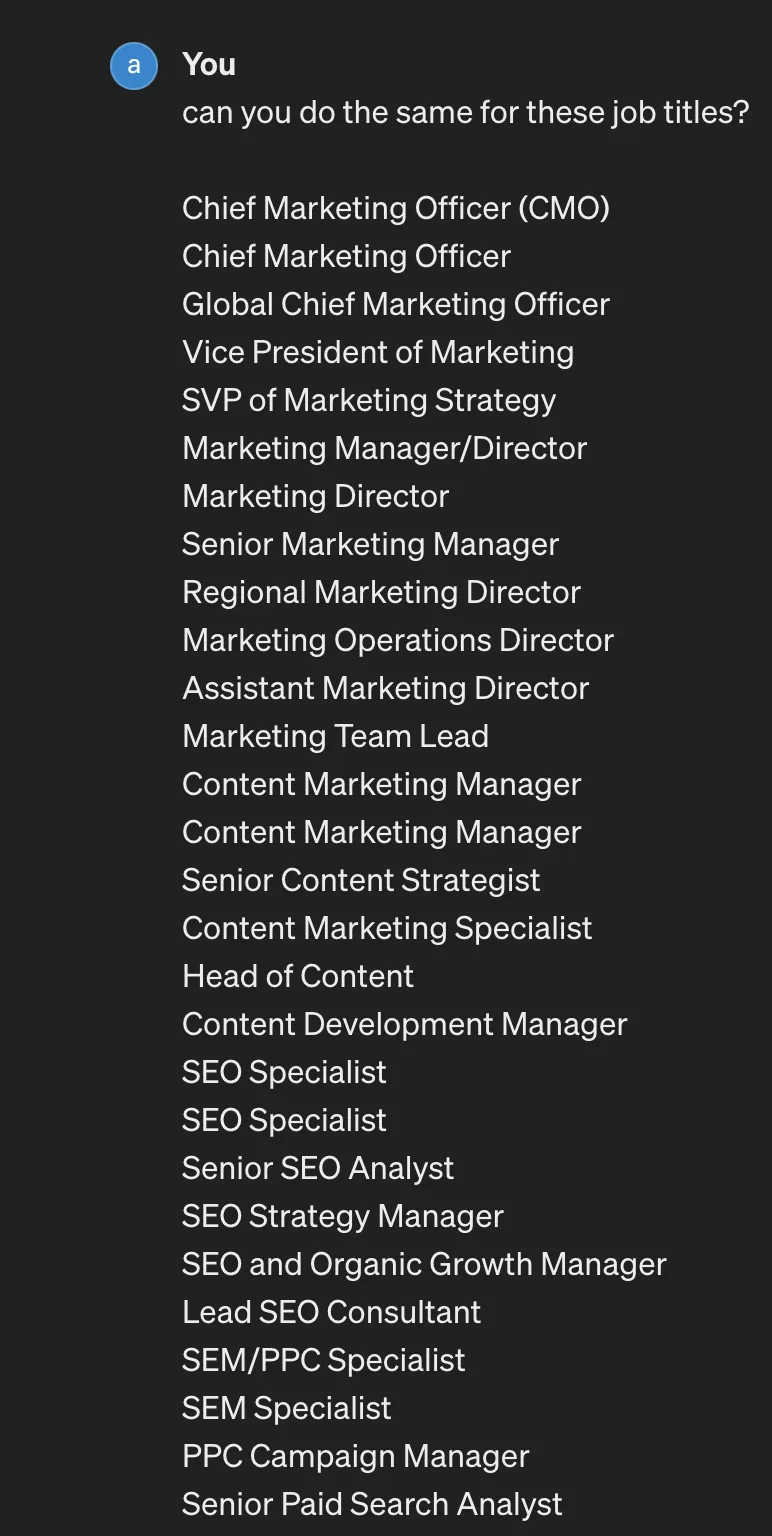
Were the results perfect? No. But the potential is clear. Getting this working is far better than having to code complex rules in HubSpot or Marketo for every title under the sun.